
Table of Contents
- Why Cosmetic Dentistry Pricing Varies So Much
- Professional Teeth Whitening Cost: What Shapes the Investment
- Smile Makeover Treatment Planning: From First Conversation to Final Result
- The Dental Implant Consultation Process Explained
- What Cosmetic Dentistry Pricing Actually Reflects
- Common Concerns Before Committing to Treatment
- How to Get an Accurate Quote for Your Treatment
- Frequently Asked Questions
Last Updated: August 31, 2026
Cosmetic dentistry pricing is one of the most searched, and least clearly answered, topics in private dental care. Patients want to understand what drives the cost before they commit, which is entirely reasonable. At Aviva Cosmetic Dentistry, we believe that transparency about what shapes investment in your smile is as important as the clinical work itself. This guide breaks down the real factors behind cosmetic dentistry pricing, what different treatments involve, and how to approach getting an accurate, personalised quote.
Why Cosmetic Dentistry Pricing Varies So Much
The biggest mistake people make when researching cosmetic dentistry costs is treating them like a fixed menu. They are not. A teeth whitening treatment for one patient is a straightforward, predictable procedure. For another, one with existing restorations, uneven enamel, or underlying sensitivity, it requires a more considered approach. The clinical picture changes everything.
Cosmetic dentistry pricing varies because no two mouths are the same, and no ethical practitioner should quote a fixed price before examining you.
The Role of Clinical Complexity
The single largest driver of cost in cosmetic dentistry is clinical complexity. A patient who needs a single veneer on a healthy tooth with good underlying structure requires far less clinical time and planning than someone who needs multiple veneers alongside bite correction or gum-level adjustments. Full mouth rehabilitation, which involves restoring the function and appearance of every tooth, is among the most technically demanding work in dentistry. It requires precise occlusal analysis, staged treatment planning, and often collaboration across multiple disciplines.
Complexity also affects materials. High-quality, layered ceramic restorations that mimic the translucency of natural enamel cost more to produce and place than simpler alternatives. The skill required to seat them correctly, match shade and shape to the surrounding dentition, and ensure long-term function is substantial. Cutting corners on materials or technique is how patients end up with veneers that chip, discolour, or look obviously artificial within a few years.
Digital Technology and What It Changes
Digital workflows have transformed what is possible in cosmetic dentistry, and they have also changed how pricing is structured. Intraoral scanning, digital smile design software, and computer-aided manufacturing of restorations all require significant capital investment from the practice. That investment is reflected in treatment costs, but it delivers something worth paying for: precision, predictability, and fewer appointments.
A digital workflow means your treatment is planned in detail before anything touches your teeth. You can see a simulation of your proposed result. Your restorations are milled to exact tolerances rather than built by hand in a laboratory. According to the General Dental Council’s guidance on digital dentistry, digital tools are increasingly central to delivering consistent, high-quality outcomes. Practices that have invested in this technology are pricing that capability into their fees, and patients who have experienced both analogue and digital dentistry consistently describe the difference.
Professional Teeth Whitening Cost: What Shapes the Investment
Professional teeth whitening cost is shaped by several variables that are often glossed over in generic price comparisons. The type of whitening system used, whether treatment is carried out in-surgery or via a supervised take-home kit, the starting shade of your teeth, and whether any preparatory work is needed all influence what you will pay.
What matters more than the headline figure, though, is the clinical oversight behind it. Whitening carried out without a proper assessment can cause sensitivity, uneven results, or damage to existing restorations. The Oral Health Foundation’s guidance on tooth whitening is clear that whitening must be prescribed and supervised by a registered dental professional, not a beauty salon or unregulated provider. The professional teeth whitening cost at a reputable practice reflects that clinical oversight, the quality of materials used, and the experience of the clinician managing your care.
If you have existing crowns, veneers, or composite bonding, whitening will not change their colour. A thorough assessment before treatment ensures your result is consistent across all your teeth, not just the natural ones.
Smile Makeover Treatment Planning: From First Conversation to Final Result
Most people assume a smile makeover begins with a treatment plan. It does not. It begins with a conversation.

Smile makeover treatment planning is the process of mapping every element of your desired outcome against your clinical starting point. That includes your existing teeth, your gum health, your bite, your facial proportions, and, critically, what you actually want. A good smile makeover does not impose a result on you. It designs one with you.
Health First, Aesthetics Second
This is the part most cosmetic dentistry guides skip entirely. Before any cosmetic work begins, the mouth must be healthy. Active gum disease, decay, failing restorations, or signs of grinding will all affect the longevity of cosmetic treatment. Placing veneers over unhealthy foundations is how expensive work fails prematurely.
At Aviva Cosmetic Dentistry, the clinical philosophy is explicit on this point: health comes before aesthetics, always. Any source of infection or inflammation is identified and resolved before cosmetic treatment is planned. This approach protects the patient and protects the investment. It also means that the smile makeover treatment planning process sometimes involves a preparatory phase, and that phase should be factored into the overall cost conversation from the outset.
How Natural-Looking Results Are Designed
The most common complaint patients bring to us about previous cosmetic work is that it looked fake. Veneers that were too white, too uniform, or too bulky. Results that announced themselves in every photograph. Natural-looking cosmetic dentistry requires a different approach: one that accounts for the individual characteristics of your face, skin tone, lip line, and existing teeth.
Digital smile design allows clinicians to model a proposed result before any preparation work begins. Shade selection is done in natural light, not under surgery lighting alone. The shape of each restoration is considered in relation to the whole smile, not in isolation. This level of planning takes time, and time, alongside expertise, is what cosmetic dentistry pricing reflects.
The Dental Implant Consultation Process Explained
The dental implant consultation process is more involved than a standard dental appointment, and understanding why helps patients appreciate what they are paying for. Implants are a surgical and restorative treatment combined. The consultation must assess bone volume and density, gum health, bite forces, and the overall condition of the remaining dentition.
A thorough implant consultation typically involves a detailed clinical examination, 3D cone beam CT scanning to assess the bone in three dimensions, and a full discussion of your medical history. This is not a box-ticking exercise. The information gathered directly determines whether implants are appropriate, where they can be placed, and what the restoration on top will look like. As outlined in the NHS guidance on dental implants, implants are not suitable for everyone, and a proper assessment is essential before treatment proceeds.
Single Implants Versus Full-Arch Reconstruction
Single implant treatment and full-arch reconstruction sit at very different points on the clinical complexity scale, and cosmetic dentistry pricing reflects that gap.
| Treatment Type | Clinical Scope | Planning Involved | Typical Timeline |
|---|---|---|---|
| Single dental implant | One tooth replacement | Bone assessment, single placement | 3-6 months |
| Multiple implants | Several teeth | Extended planning, staged placement | 6-12 months |
| Full-arch reconstruction | All teeth on one or both arches | Full occlusal rehabilitation | 12+ months |
| Full mouth rehabilitation | Restorative + implant combined | Multidisciplinary planning | Variable |
A single implant replaces one missing tooth with a titanium root and a ceramic crown. Full-arch reconstruction, often referred to as implant-supported bridges or full-arch fixed prosthetics, replaces an entire arch of teeth supported by a small number of implants. The surgical planning, the laboratory work, the number of appointments, and the clinical skill required are all substantially greater. Patients considering full-arch work should expect a detailed, multi-stage consultation process before any treatment fee is confirmed.
What Cosmetic Dentistry Pricing Actually Reflects
Cosmetic dentistry pricing is not arbitrary. The investment you make covers several distinct components, and understanding them helps contextualise what might initially seem like a significant outlay.
Clinical expertise. Advanced cosmetic and restorative dentistry requires postgraduate training that goes well beyond a standard dental degree. Clinicians who specialise in prosthodontics, implantology, or smile design have invested years in developing that expertise. The Aviva Cosmetic Dentistry team includes practitioners with postgraduate qualifications from institutions including King’s College London, bringing a level of clinical depth that is reflected in outcomes.
Materials. High-quality ceramic restorations, biocompatible implant components, and precision-milled prosthetics are expensive to produce. The difference between a restoration that looks natural for twenty years and one that chips or discolours within five often comes down to material quality and the skill of the laboratory that made it.
Technology. Digital scanning, 3D imaging, computer-aided design and manufacture, these tools cost practices substantial sums to acquire and maintain. They exist because they improve accuracy, reduce chair time, and give patients predictable results.
Time. Unhurried, thorough dentistry takes longer. A consultation that properly explores your concerns, examines your mouth comprehensively, and discusses your options honestly cannot be done in fifteen minutes.
When comparing cosmetic dentistry pricing between practices, the question is not simply “what does it cost?” but “what does that cost include?” A lower headline figure that skips the health assessment, uses inferior materials, or rushes the planning phase is rarely the better value.
Common Concerns Before Committing to Treatment
Committing to significant dental work raises legitimate questions, and the best practices expect and welcome them.
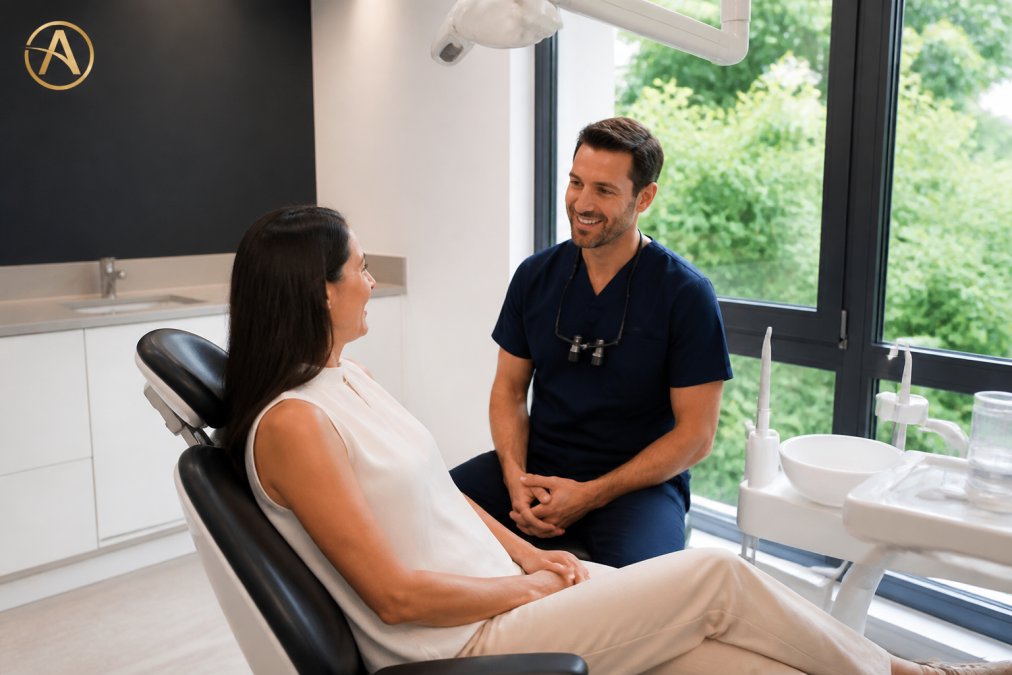
“How do I know the work will last?” Longevity depends on the quality of the planning, the materials, and the clinical execution, but also on the health of the foundation. Cosmetic work placed on a healthy, well-maintained mouth lasts significantly longer than work placed without addressing underlying issues. Ask your clinician what preparatory work, if any, is needed before cosmetic treatment begins.
“I’m anxious about dental procedures.” Anxiety about dental treatment is extremely common, and a practice that takes it seriously will adjust its approach accordingly. This means unhurried appointments, thorough explanations before anything happens, and the option to stop or pause at any point. Nervous patients often find that a calm, private setting and a clinician who listens make a substantial difference.
“What if something goes wrong after treatment?” This is a fair and important question. Ask your practice what aftercare and follow-up is included, and what the process is if a restoration requires attention. A practice that stands behind its work will have a clear answer.
“How many appointments will I need?” This depends entirely on your treatment. A digital workflow reduces the number of appointments needed compared to traditional approaches, but complex treatment takes time. A realistic timeline should be discussed at consultation, including whether your goals are achievable within a specific timeframe, such as before a significant life event.
Be cautious of any practice that quotes a fixed price for cosmetic work without first examining you. A quote given without a clinical assessment cannot account for your individual needs and may not reflect the true cost of treatment.
How to Get an Accurate Quote for Your Treatment
An accurate quote for cosmetic dentistry treatment is only possible after a thorough clinical assessment. There is no shortcut to this, and any practice that offers one without examining you is either guessing or omitting important variables.
The process at a reputable practice typically works as follows. First, an initial consultation covers your concerns, your goals, and a clinical examination of your teeth, gums, and bite. Photographs and, where relevant, scans are taken. From that information, a treatment plan is developed that sequences any necessary preparatory work alongside the cosmetic treatment itself. The fee is then presented as a detailed breakdown, not a single figure, so you understand what each element covers.
According to the Care Quality Commission’s standards for private dental care, patients are entitled to a clear written treatment plan including costs before treatment begins. Any practice operating to a high standard will provide this as a matter of course.
Questions worth asking at your consultation include: what preparatory work is needed before cosmetic treatment can begin, what materials will be used and why, what the realistic timeline looks like, and what aftercare is included in the fee. A clinician who welcomes these questions and answers them clearly is one worth trusting with your care.
Choosing where to invest in your smile is a significant decision, and cosmetic dentistry pricing should never be evaluated on cost alone. The quality of the clinical team, the technology behind the treatment, and the philosophy of care all determine whether your results last. Aviva Cosmetic Dentistry offers a fully digital, health-first approach to cosmetic and restorative dentistry, with an internationally experienced clinical team and a commitment to natural-looking, long-lasting outcomes. Book your consultation now and get a clear, personalised picture of what your treatment would involve.
Frequently Asked Questions
Is cosmetic dentistry available on the NHS?
Cosmetic dental treatments, veneers, teeth whitening, and smile makeovers, are not available on the NHS because they are considered aesthetic rather than clinically necessary. The NHS covers treatments that restore function and oral health. If you want to improve the appearance of your smile, you will need to see a private cosmetic dentist. A thorough consultation will clarify exactly which treatments suit your needs and what the investment looks like for your specific case.
What factors influence the cost of a smile makeover?
Cosmetic dentistry pricing depends on several things: the number of teeth being treated, the procedures involved, the materials chosen, and the clinical complexity of your case. A single-tooth veneer costs far less than a full smile redesign involving multiple restorations. The experience of the clinical team, the technology used, and the time invested in planning also shape the overall investment. No two smile makeovers are identical, which is why a personalised consultation is essential before any figures are discussed.
Are consultations for cosmetic dentistry usually chargeable?
Private cosmetic dental practices typically charge for consultations because a thorough assessment takes significant clinical time. At this stage, your dentist will examine your teeth, review any imaging, discuss your goals, and begin mapping out a treatment plan. Some practices offer an initial conversation at no charge before moving to a full clinical assessment. It is worth asking when you book. The consultation is where accurate, personalised pricing is established, so it is a necessary step, not an optional one.
What is the difference between restorative and cosmetic dental treatments?
Restorative dentistry focuses on repairing or replacing teeth to restore function, dental implants, crowns, and bridges fall into this category. Cosmetic dentistry focuses on improving appearance through treatments like veneers, whitening, and composite bonding. In practice, the two often overlap. A well-planned smile makeover may combine restorative work to rebuild damaged or missing teeth with cosmetic finishing to achieve a natural, aesthetic result. The best outcomes come from treating health and appearance together rather than in isolation.
This article was written using GrandRanker
