
Table of Contents
- Why Replace Missing Teeth With Dental Implants
- Suitability for Dental Implants: Who Can Have Them
- The Dental Implant Process, Step by Step
- Benefits of Dental Implants vs Dentures
- Dental Implant Recovery Timeline and Aftercare
- Choosing an Implant Dentist and What to Ask
- Frequently Asked Questions
Last Updated: September 22, 2026
Why Replace Missing Teeth With Dental Implants
Getting dental implants for missing teeth is the most durable way to restore both the look and the function of your smile. A dental implant is a small titanium post placed into the jawbone to act as an artificial tooth root, supporting a crown, bridge or full arch that behaves like a natural tooth (Dental implants – Overview).
At Aviva Cosmetic Dentistry, we plan every implant around the health of the whole mouth, not just the gap. Leaving a space untreated rarely stays neutral. Neighbouring teeth drift into it, the bite shifts, and the jawbone beneath the gap gradually loses volume because there is no root to stimulate it. Dentures sit on top of the gums and do nothing to slow that change. Implants are placed in the bone itself, so they support the surrounding structure rather than resting on it.
That distinction shapes everything that follows: how we assess you, how the treatment is sequenced, and how long the result lasts.
Suitability for Dental Implants: Who Can Have Them
Most adults with one or more missing teeth are suitable for dental implants, provided the jawbone can support them and the mouth is free of active infection. Suitability is not a simple yes or no; it is a question of preparation.
Health and Lifestyle Factors That Affect Candidacy
Several factors influence whether implants are the right route for you, or whether something needs addressing first:
- Bone volume. Implants need enough healthy bone to anchor into. Where bone has been lost, grafting can rebuild the site before placement.
- Gum health. Active gum disease is treated before any implant is placed. Placing an implant into inflamed tissue is one of the most common reasons implants fail later.
- Smoking. Smoking restricts blood flow to the healing site and slows integration. Stopping, even temporarily, improves the odds considerably.
- Medical conditions and medication. Uncontrolled diabetes, certain immune conditions and some medications affect healing. These are reviewed individually rather than treated as automatic exclusions.
- Bite and alignment. How your teeth meet under load matters. An implant placed into an unbalanced bite takes forces it was never designed for.
This is where a thorough assessment earns its keep. At Aviva Cosmetic Dentistry, we identify and address any source of infection or inflammation before treatment begins, because a healthy foundation is what makes a restorative result last.
The Dental Implant Process, Step by Step
The dental implant process typically runs across several appointments: assessment and digital scanning, implant placement, a healing period while the implant integrates with the bone, and finally fitting the permanent restoration. The exact number of visits depends on your case.
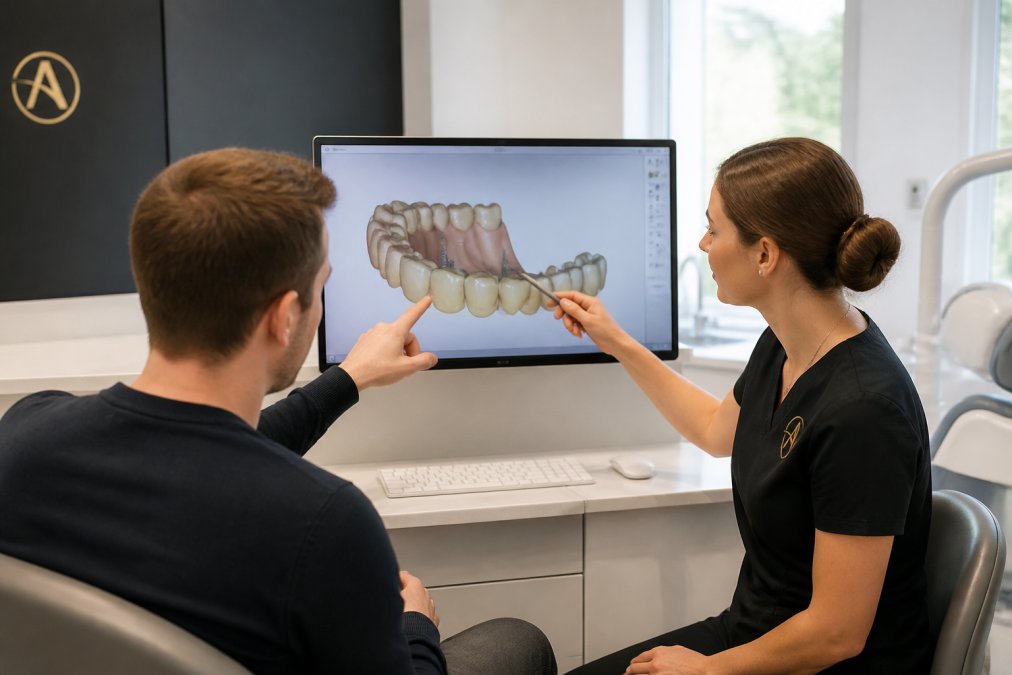
From Digital Scans to Final Restoration
Total time: varies by case, often several months from placement to final restoration.
- Assessment and digital planning. We scan the mouth and jaw in three dimensions, review the bite, and map exactly where each implant will sit. Planning on screen before treatment begins is what makes the outcome predictable.
- Placement. The implant is positioned into the jawbone under local anaesthetic. Most patients describe it as less involved than they expected.
- Integration. Over the following weeks and months, the bone bonds with the implant surface. This is why implants feel solid rather than sitting on top of the gum.
- Restoration. Once integrated, the permanent crown, bridge or arch is fitted and the bite is refined.
Ask how the final restoration will be matched to your other teeth before treatment starts, not after. Shade and shape decisions made at the planning stage are what stop an implant looking like a replacement part.
Benefits of Dental Implants vs Dentures
Dental implants are fixed in the jawbone and cleaned like natural teeth, while dentures rest on the gums and are removed daily. That single difference drives most of the practical trade-offs between them.
| Factor | Dental Implants | Dentures |
|---|---|---|
| Fit | Fixed in the jawbone | Rests on the gums |
| Stability | Does not move when speaking or eating | Can shift; adhesive often needed |
| Effect on jawbone | Stimulates bone at the site | Does not prevent bone loss |
| Daily care | Brush and clean as normal teeth | Remove, clean and soak daily |
| Adjacent teeth | Usually left untouched | Often requires support from neighbouring teeth |
| Treatment time | Months, including healing | Often weeks |
Dental Implant Recovery Timeline and Aftercare
Dental implant recovery happens in two stages: the first week or two after placement, when the gum settles, and the longer integration period when the bone bonds with the implant. Most people return to normal routines within a few days.
Looking After Implants for the Long Term
Implants do not decay, but the gum and bone around them can still be affected by disease, so the maintenance routine matters as much as the placement.
- Clean around the implant daily, including the gum margin
- Keep routine hygiene appointments so the site is checked and monitored
- Address gum inflammation early rather than letting it settle in
- Wear a night guard if you grind, to protect the restoration from excess load
- Keep medical history up to date, since some conditions and medications affect the surrounding tissue
Skipping hygiene appointments after implant treatment is the most common way patients undermine a good result. Gum disease around an implant is harder to treat than around a natural tooth, and it can progress with far less warning.
Choosing an Implant Dentist and What to Ask
Choose an implant dentist on the strength of their assessment process, not the headline treatment. Anyone can quote for an implant; the difference shows in how carefully they plan it and how they handle problems afterwards.
Ask these questions before committing:
- Who will place the implant, and what is their training in restorative and implant dentistry?
- Will I see a full digital scan and plan before treatment begins?
- How many appointments will I realistically need, and how are they scheduled?
- What happens if the implant does not integrate or a restoration needs attention later?
- Can you show me before and after examples of similar cases?
- How do you handle nervous patients and longer appointments?
Frequently Asked Questions
Are dental implants the best option for missing teeth?
For many people, dental implants are the closest thing to a natural tooth because they replace both the root and the crown. They avoid the removable plastic base of a denture and don’t rely on grinding down healthy neighbouring teeth, as a bridge does. Whether they are the best choice depends on your bone volume, gum health and general health, so a full assessment is the only way to know for certain.
What is the process for getting dental implants?
It usually starts with a consultation, digital scans and sometimes a CBCT scan to map bone and nerves. If you are suitable, the implant is placed into the jaw under local anaesthetic, then left to fuse with the bone over several months. A healing cap or temporary tooth may be fitted, and once the implant is stable, a custom crown is attached. Some cases need a bone graft first, which adds time.
Is dental implant surgery painful?
The placement itself is carried out under local anaesthetic, so you should not feel pain during the procedure. Most patients report that the days afterwards feel similar to a straightforward extraction, with tenderness, swelling and some bruising that settle over the first week. Over-the-counter pain relief is usually enough, and your clinician will give you specific aftercare instructions to follow.
How long do dental implants last?
Many implants function well for decades when they are looked after properly. Longevity depends on your gum health, bone quality, smoking status and how consistently you attend hygiene appointments. The crown on top may need replacing sooner than the implant itself because it takes the wear of chewing. Regular check-ups let your dentist spot early problems before they affect the implant.
How long is the dental implant recovery timeline?
The first week is usually the most noticeable, with swelling and tenderness easing day by day. Soft tissue generally heals within two to three weeks, but the implant needs several months to fuse with the bone before the final crown is fitted. Your dental implant recovery timeline will be confirmed at your consultation and depends on whether grafting, extractions or a temporary restoration are part of your plan.
What are the benefits of dental implants vs dentures?
The main benefits of dental implants vs dentures are stability and bone preservation. Implants are fixed in place, so they don’t move or click when you eat and speak, and they help maintain the jawbone that would otherwise shrink after tooth loss. Dentures are usually quicker and less invasive to fit, but they can need adjusting over time. Your clinician can explain which suits your mouth.
How do I know if I am a suitable candidate for dental implants?
Suitability for dental implants is assessed with a clinical examination, gum measurements and imaging of the bone. Good general health, healthy gums and enough bone volume all help. Uncontrolled diabetes, active gum disease and smoking can affect healing and may need addressing first. Some patients need a bone graft or sinus lift before implants can be placed, which your dentist will discuss with you.
How many appointments will I need for dental implants?
Most plans involve a consultation and planning visit, the placement appointment, a review, and then the final crown fitting once healing is complete. That is often around four to six visits spread over several months, though grafting or extractions can add more. Your practice can usually group appointments where possible, which helps if you have a busy schedule or a specific event to work towards.
