
Table of Contents
- Why Choose Private Dental Implants in St Albans?
- Benefits of Dental Implants vs Bridges
- Dental Implant Procedure Steps: From Consultation to Fitting
- Recovery Time for Dental Implants: What to Expect
- How to Care for Dental Implants for Long-Term Success
- Addressing Anxieties: Our Approach to Comfortable Implant Care
- Your Next Step: Booking a Consultation
- Frequently Asked Questions
Last Updated: September 6, 2026
Why Choose Private Dental Implants in St Albans?
Private dental implants in St Albans offer a permanent solution for missing teeth that prioritises both oral health and natural aesthetics. Unlike standard NHS provision, which focuses on essential function, private treatment delivers a fully digital, bespoke approach where the entire process is planned around your facial structure, bite and long-term wellbeing. This guide from Aviva Cosmetic Dentistry explains what the treatment involves, from your first consultation to the final fitting.
The real advantage of choosing private care lies in the detail. Treatment is delivered by a team using advanced restorative techniques, with each implant positioned to preserve the surrounding bone and gum tissue. For patients in St Albans, this means greater comfort and results designed to last.
Benefits of Dental Implants vs Bridges
Dental implants are widely considered the gold standard for replacing missing teeth because they replace the root as well as the crown. A bridge anchors onto adjacent healthy teeth, which means those teeth must be filed down to support the restoration. An implant, by contrast, stands independently, preserving your natural tooth structure.
The benefits of dental implants vs bridges extend beyond preservation. Implants stimulate the jawbone through normal chewing forces, preventing the bone loss that typically follows tooth extraction (PubMed). Bridges do not offer this stimulation, which can lead to a sunken appearance over time. Implants are also easier to clean, as you brush and floss them exactly like natural teeth, without the specialised cleaning aids bridges require.
| Consideration | Dental Implant | Bridge |
|---|---|---|
| Adjacent teeth | Left untouched | Filed down for support |
| Jawbone health | Stimulates and preserves | No stimulation, bone loss continues |
| Cleaning | Brushes and flosses naturally | Requires specialist floss threaders |
| Longevity | Can last many years with care | Typically needs replacement after 10-15 years |
| Appearance | Root-to-crown natural result | Depends on underlying teeth |
The key difference is structural. An implant preserves your bone and your remaining teeth; a bridge trades one problem for another.
Dental Implant Procedure Steps: From Consultation to Fitting
The dental implant procedure steps follow a clear sequence designed to protect your health at every stage. Most patients are surprised by how straightforward the process feels, particularly with modern digital planning.
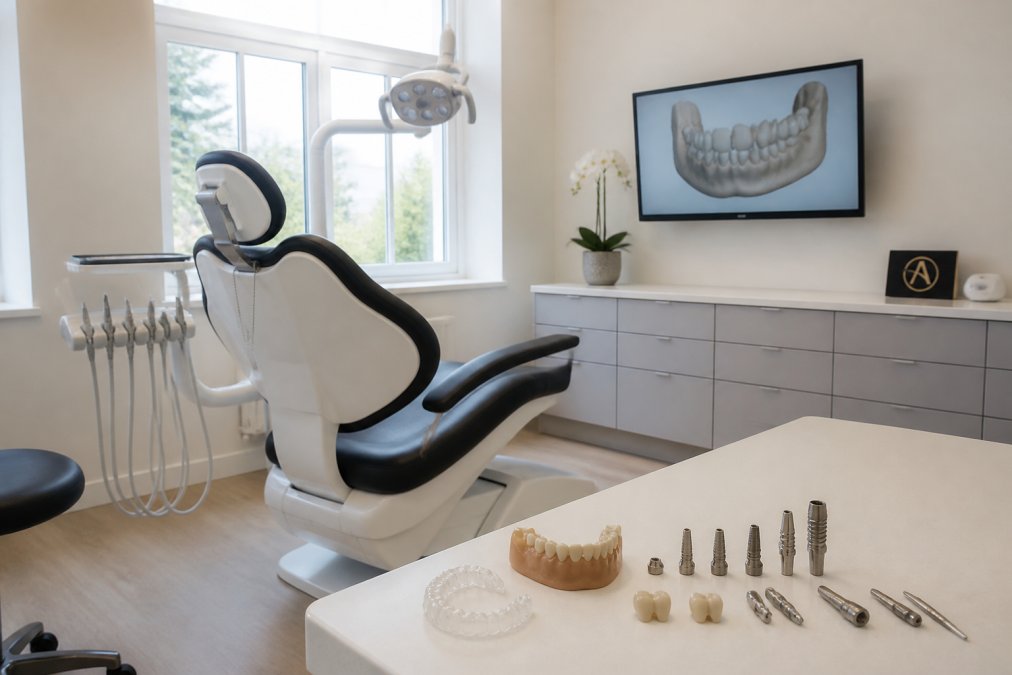
Step 1: Comprehensive assessment. Your journey begins with a thorough examination, including 3D imaging to evaluate bone density and identify any underlying infection or inflammation. This is where a biological approach matters. Treatment only proceeds once your mouth is healthy.
Step 2: Treatment planning. Your clinician designs the implant placement digitally, mapping the optimal position for strength and aesthetics. You will see your proposed smile before any treatment begins.
Step 3: Implant placement. The titanium implant is gently placed into the jawbone under local anaesthetic.
Step 4: Healing and integration. The implant is left to fuse with the bone over several months. A temporary restoration keeps your smile intact during this period.
Step 5: Final restoration. Once integration is confirmed, your custom-made crown, bridge or denture is fitted and adjusted for a precise, natural bite.
Recovery Time for Dental Implants: What to Expect
Recovery time for dental implants varies by patient, but the typical healing period before the final restoration is fitted ranges from three to six months (the American Dental Association). This allows the implant to osseointegrate, meaning the bone grows firmly around the titanium post to create a stable foundation.
The initial recovery after placement is shorter than most people expect. Most patients return to normal activities within a day or two, managing any discomfort with over-the-counter pain relief. Swelling and minor bruising usually settle within a week. A soft-food diet is recommended during the early healing phase, gradually progressing as comfort allows.
The quality of your healing is directly influenced by the health of your mouth before treatment. Addressing any existing gum disease first can contribute to smoother recoveries.
How to Care for Dental Implants for Long-Term Success
Caring for dental implants is straightforward, but it requires consistency. The golden rule is that implants demand the same hygiene standards as natural teeth, because the surrounding gum tissue remains vulnerable to infection.
Your daily routine should include brushing twice a day with a soft manual or electric brush, and flossing or using interdental brushes to clean the spaces around the implant. Regular professional hygiene appointments are essential. Your clinician will also monitor the health of the gum seal around each implant, checking for any early signs of inflammation before they develop into problems.
A common mistake is treating an implant as if it is invincible. While the titanium post cannot decay, the gums around it can. Peri-implantitis, an inflammatory condition affecting the tissues around an implant, is the leading cause of late implant failure (peer-reviewed research). Prevent it through meticulous cleaning and routine check-ups.
Addressing Anxieties: Our Approach to Comfortable Implant Care
Dental anxiety is one of the most common reasons patients delay implant treatment. The thought of surgery, particularly involving the jawbone, can feel daunting. At Aviva Cosmetic Dentistry, we have built our approach around making every stage as comfortable and predictable as possible.
A fully digital workflow is central to this. Rather than relying on traditional impressions and guesswork, every implant is planned on a screen using 3D imaging. You see exactly what will happen before it happens, which removes much of the uncertainty that fuels anxiety. The calm, private setting and unhurried appointments mean you are never rushed, and you can pause treatment at any point.
If you have avoided dental treatment because of a difficult experience elsewhere, tell your clinician during the consultation. Knowing your history allows the team to adapt their approach, from explaining each step in more detail to agreeing on break signals during the procedure.
Your Next Step: Booking a Consultation
The decision to pursue private dental implants in St Albans begins with a conversation. A consultation with Aviva Cosmetic Dentistry gives you a clear diagnosis, a tailored treatment plan and an honest discussion about whether implants are the right choice for your circumstances.
You will meet a team with decades of experience in advanced restorative dentistry, supported by state-of-the-art digital technology. Every recommendation is grounded in your oral health first, ensuring your smile is built on a foundation that will last. If you have missing teeth, an uncomfortable denture or a failing bridge, the sooner you seek advice, the more options you preserve.
Book your consultation now and take the first step toward a healthy, confident smile.
Frequently Asked Questions
Are dental implants considered a permanent solution?
Dental implants are designed to be a long-term solution for missing teeth. Unlike bridges or dentures, the titanium post is placed into the jawbone, where it fuses through a process called osseointegration. This provides a stable foundation for a crown, bridge, or denture. With proper care and regular check-ups, implants can last for many years. However, it’s important to maintain excellent oral hygiene to ensure the health of the surrounding gum and bone.
How long does the entire private dental implant process take?
The full process, from initial consultation to final fitting, typically takes several months for private dental implants. The timeline varies based on your individual healing rate and whether bone grafting is needed. After the implant is placed, it usually needs 3 to 6 months to fuse with the bone. Once healing is confirmed, the final crown or restoration is fitted. At your consultation in St Albans, a detailed, personalised timeline will be mapped out for you.
Is dental implant surgery painful?
Dental implant surgery is performed under local anaesthetic, so you should not feel pain during the procedure itself. After the anaesthetic wears off, you may experience some discomfort, swelling, and minor bruising. This is typically managed well with over-the-counter pain relief and usually subsides within a few days. Our team will provide clear aftercare instructions to ensure your comfort throughout the healing process.
How do I maintain my dental implants for long-term health?
Caring for dental implants requires the same diligence as natural teeth. You should brush twice a day with a soft-bristled brush and use interdental brushes or floss to clean around the implant and under the crown. Regular professional check-ups and hygiene appointments are essential to monitor the health of the implant and surrounding tissues. Avoiding hard foods and habits like smoking will also contribute to the longevity of your private dental implants.